Wednesday, March 28, 2018

Catching a Glimpse of Eliyahu Ha-Navi


Did you see him?  Is he really there?

Rabbi Moshe Chagiz (Shtei HaLechem 46, early eighteenth century) writes “There is no doubt that Eliyahu the Prophet will come into every Jewish house to see the fulfillment of one commandment which is really two: Pesach and milah,” and he then goes to Heaven to advocate on behalf of the Jewish nation for the coming of the Final Redemption.  Rabbi Yechezkel Landau, the Nodeh B’Yehudah, used to “escort” Eliyahu down the steps of his house after the Seder, and the custom among Belz Chassidim is to accompany Eliyahu until the nearest shul.  Certainly sounds like Eliyahu is there.

Then where is Eliyahu? How come I can’t see him? I am sure I am not alone in not seeing him. Opening the door for Eliyahu and welcoming him to the Seder is a custom that transcends geographical origins and level of observance.  Everybody knows this one.  What are we to make of, as one writer calls him, this perennial Passover no-show?

We don’t need to actually see Eliyahu.  We need to understand his message of Judaism remaining relevant from one generation to the next. 

When the Talmud poses a question which is not resolved, the conclusion is sometimes “teiku,” which stands for tishbi yetareitz kushyot v’abayot – We will only resolve the issue when Eliyahu the Tishbite provides an answer in messianic times.  Why should we turn to Eliyahu in messianic times?  Thanks to the promised resurrection of the dead, won’t there be other Jewish greats to ask – maybe Moshe or one of the Talmudic giants? 

Rabbi Levi Yitzchak of Berditchev explains that it is Eliyahu who remains more relevant than any other Jewish hero.  Moshe died and went to the next world, never to be heard from since.  Eliyahu ascended to heaven in a whirlwind. (II Kings 2:11)  Eliyahu never died, and he remains “in touch” with us until today.  He “attends” every bris ceremony, at which we give him a special chair.  He makes an appearance on Saturday nights and is part of the traditional liturgy recited by many.  And Eliyahu makes it to every Seder on Pesach.  Eliyahu can answer the questions better than anyone else since he has maintained the greatest connection with Jews throughout history.

Eliyahu bridges the generation gap.  Eliyahu represents the ability of Judaism to remain relevant from one generation to the next.

וְהֵשִׁ֤יב לֵב־אָבוֹת֙ עַל־בָּנִ֔ים וְלֵ֥ב בָּנִ֖ים עַל־אֲבוֹתָ֑ם

Eliyahu will reconcile parents with children and children with their parents…(Malachi 3:24)

Parents and children often see things differently and don’t speak the same language.  We often witness the weakening of familial or traditional bonds from one generation to the next.  Eliyahu reminds us – and encourages us – to bridge that gap.

Parents should understand that the next generation is being brought up in a vastly changed world with very different technological and social norms.

Children should appreciate the value of being the next chapter in a story that goes back thousands of years and assume responsibility for carrying the traditions forward.

When we open our doors for Eliyahu, we may not see him physically, but we encounter something far more meaningful: an approach to redeeming the Jewish present and ensuring the future.

Thursday, March 1, 2018

Pondering Parkland on Purim


It’s the new normal. It can’t be the new normal.

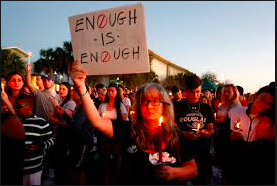
The shooting in Parkland two weeks ago continues to pain so many - and has forever impacted the lives of the families of those killed or wounded as well as all who survived the ordeal. On the one hand, we have seen this story before. There have already been 36 mass shooting incidents in 2018 - 6 since Parkland. On the other hand, the murder of students and teachers - or anyone - must shake each of us to the core. How can we become “accustomed” to these horrific acts of violence? How can we not feel the pain? Yet, the cycle continues.

In the aftermath of the shooting, the responses are similar. There is an outpouring of love, thoughts, and prayers. And there is criticism for “only” sending thoughts and prayers without actually DOING something about this crisis. (As a religious person, I’m a big of fan of both love and prayers.) There are calls to pass gun control laws - ban assault weapons and bump stocks, raise the minimum age to purchase guns, introduce stricter background checks, and be more proactive to assist those who are mentally ill and ensure they don’t have access to guns. There are the competing calls that “guns don’t kill people; people kill people” and that the second amendment is sacrosanct, so the solution to this problem must lay elsewhere.

I cannot imagine a genuine solution that doesn’t involve stricter gun laws, selling fewer guns to private citizens that have less destructive power, and being more careful who gets hold of weapons that can kill. Fewer guns means fewer people will be killed. I realize that, considering the political climate today, that it is not likely to happen so quickly. (Although I did think that Bret Stephens’ radical approach to takling this issue - repealing the second amendment and starting from scratch - would be an interesting way to reframe the conversation.)

If we’re not going to change the gun situation, what can we change? Let’s examine and the society in which we live.

President Trump made one comment in the aftermath of the Parkland shooting that caught my attention and resonated.

“Create a culture in our country that embraces the dignity of life.”

It would seem to be an obvious and self-evident value in society that all would embrace. It seems, however, to be under assault. Our society is far more fragile than it used to be with some fundamental values under assault.

There has been a familial and cultural revolution. Children are being raised differently - often with less supervision, guidance, or positive role models than they used to be. There has been a technological revolution with the internet playing an outsized role in shaping our lives. From social media to violent or vacuuos video games to an information overload that fills our heads with all sorts of unnecessary thoughts, our influences are no longer as wholesome or positive as they were - even a few years ago.

In addition, people are far less connected than they used to be.  In Bowling Alone, the sociologist Robert Putnam found that Americans are joining fewer civic organizations, socialized with friends less frequently, and signed fewer petitions.  Putnam concluded that the United States was bleeding social capital, and therefore democratic values.

Our society lacks a sense of connection. In Judaism, responsibility is a core value. As the Midrash states, we’re all in the same boat so no one person can drill a hole under his/her own seat without sinking everyone. Especially in the aftermath of Parkland, our core problem is relational. David Brooks summarizes our ills quite well: “the decline of social trust, the breakdown of family life, the polarization of national life, the spread of tribal mentalities, the rise of narcissism, the decline of social capital, the rising alienation from institutions or the decline of citizenship and neighborliness.”

Feeling more connected can make a big difference. Besides it being wonderful to have good neighbors (right, Mr. Rogers?), having strong social ties may produce more resilient neighborhoods and even help reduce gun violence.

In the aftermath of Parkland, many voices proclaimed that America should learn from Israel to eliminate such massacres. Haviv Rettig Gur convincingly challenges this view. He says gun control laws in Israel have a lot less to do with preventing school shootings than does the fact that “Israeli Jews maintain a deep and abiding faith in their shared fate and communal solidarity.”

This makes a lot of sense - especially on Purim. Shared faith and communal solidarity is very much part of the holiday.


When Esther agrees to Mordechai’s plea that she intercede with Achashveirosh and save the Jews, she asks him first to: Leich k’nos et kol ha-yehudim - Go and gather the Jews to come together and pray. Solidarity was a precondition for salvation.

In the aftermath of the “happy ending” and salvation of the Jewish people, a holiday is declared. The celebration cannot just be about mishteh - a festive meal and joyous spirit. The festival includes mishloach manot - sharing gifts with friends. We can never just celebrate by ourselves; we celebrate when we strengthen our connection with our friends and neighbors.

A real national holiday cannot only be celebrated with those whom we know. Purim includes matanot la’evyonim - gifts for the poor. In this way, the holiday encourages us to build social capital. We’re not happy unless we’re trying to make everyone happy.

Purim has many lessons. This year, the holiday provides a roadmap forward to build a society in which people care more about others, in which each person must be engaged to feel part of the social order, and in which each of us reaches out just a little bit further to create a sense of shared fate and communal solidarity.

Leich k’nos - Let’s bring people together.

Mishloach manot ish l’ray-ayhoo - Let’s share with each other.
Matanot la’evyonim - Let’s support those whom we don’t know and make them feel part of the collective.

As we ponder Parkland, Purim provides a path towards a culture and a society with a little more orah, v’simcha, v’sassone, vi’yekar - light, joy, enthusiasm, and value.

Friday, February 9, 2018

The Only Certainty is Empathy


In Eastern Europe, the rabbi was the undisputed leader of the Jewish people of his village.  Not only was he the master of religious wisdom and law, but he often served as the arbiter of disputes and the provider of common sense advice.

One day, two individuals who had a major dispute decided they would each take their case to the rabbi.  The first party to the dispute came to the rabbi and carefully outlined his side of the argument.  The rabbi listened intently, stroked his beard, and finally said, “My friend, you are right.”  The man went away satisfied.  

Later in the day, the other party to the dispute arrived and told the rabbi his side of the issue.  The rabbi again listened carefully, stroked his beard, and replied after some thought, “You are right.”

Later, the rabbi’s wife, who had overheard the rabbi’s conversations with both men, said to him, “You told both the first party and the second party that they were right. That’s impossible!”  To which the rabbi replied, “And you are right too!”

Strangely, this story came to mind as I read article after article on the subject of what Israel will do with the nearly 40,000 African migrants currently in Israel awaiting resolution of their status.  Let me explain.

Here are the facts. 

Israeli authorities have begun handing out deportation notices in accordance with the “Infiltration Law” adopted by the Israeli Knesset in December.  Deportations are due to begin in March 2018.  Migrants, who came to Israel illegally, are being offered $3,500 plus a plane ticket to depart.  Those who refuse to leave “voluntarily” will be jailed.  The government has not said where those deported will be sent.  The deportation notices simply said they would be sent to an African country that has a “stable government” and that “has developed tremendously over the last decade and has absorbed thousands of returning residents as well as migrants from various African countries.”

The migrant and refugees issues are tremendously complex and shockingly common.  There are currently over 65 million refugees.  One in every 113 people on the planet is now a refugee.  Around the world, someone is displaced every three seconds, forced from their homes by violence, war and persecution.

Many have argued that the African migrants in Israel are refugees deserving asylum.  They have pointed out Israel has recognized refugee status for only one Sudanese and 10 Eritreans, out of thousands of applications for asylum, an acceptance rate of 0.056%.  Meanwhile, the European Union has recognized asylum claims from 90% of Eritreans who apply for refugee status and 56% of Sudanese, according to the European Stability Institute.

At the same time, countries need to do what they feel is best.  Prime Minister Netanyahu recently noted:

International law places obligations on countries and it also gives them rights. There is an obligation to accept refugees, and we accept refugees, but international law also gives the right to a country to remove from its borders illegal migrants. We have no obligation to allow illegal labor migrants who are not refugees to remain here.

This doesn’t mean that the decision to deport was an easy one.  Interior Minister Aryeh Deri, when asked about criticism of the Israeli plan as being insensitive, responded: “We are doing this after many sleepless nights. We are not ignoring the issues. We reached the decision that we have to do this for the future of Israel and the future of the people of Israel.”

The complexity of the issue may be why it was recently reported that Israel is negotiating with the United Nations High Commission on Refugees to resettle some of the African asylum seekers in third countries deemed by the UN to be “safe,” in exchange for some of the refugees to be given permanent residency in Israel.

Which side is right?

Most Israelis agree with the government.  A recent survey found that two-thirds of the public (65.9%) support the plan.  Chief Rabbi of Israel David Lau expressed his support for the government plan.  He said, “The State of Israel is obliged to help refugees, but let’s distinguish between refugees and work [seeking] migrants.”

At the same time, there are many voices calling for Israel to reverse its decision.

Over 750 rabbis signed a letter to Prime Minister Netanyahu claiming that Israel must not deport those seeking asylum within its borders.  They wrote that “we Jews know far too well what happens when the world closes its doors to those forced to flee their homes.” 

There are voices of protest in Israel.  Holocaust survivors have pledged to hide the African immigrants in their own homes.  Doctors, nurses and psychologists have said that those the government is calling illegal immigrants are actually victims “who have come to us in their flight from genocide, torture, violence and rape.”  Professor Asa Kasher, author of the Israel Defense Forces code of ethics and commonly cited on moral issues, wrote in a Facebook post: "To get rid of the foreigners is to abandon the Israeli goal of being a model society.”

It’s a complex issue. 

Ruth Berdah-Canet, a French-Jewish filmmaker who observed the lives in Israel of a group of asylum seekers from South Sudan in 2012, noted this issue is unlike others that have a more predictable breakdown of who holds certain views based on ideology. 

There’s something unique about this issue in Israel, because it cuts across society.  On other issues, like the IDF or the peace process, there are predictable divides between left and right, between religious and non-religious, between young and old – but go to a demonstration against the deportations, and it’s not uncommon to see an orthodox rabbi alongside left-wing activists.

It is impossible for both sides of an argument to be right, but one thing is absolutely clear in this complex and heartbreaking issue:  We need to feel the pain of the others.

Rabbi Jonathan Sacks has a beautiful article on Parshat Mishpatim entitled “The Power of Empathy.”  We are very familiar with the verses from the portion admonishing us not to oppress the stranger.

וְגֵ֥ר לֹא־תוֹנֶ֖ה וְלֹ֣א תִלְחָצֶ֑נּוּ כִּֽי־גֵרִ֥ים הֱיִיתֶ֖ם בְּאֶ֥רֶץ מִצְרָֽיִם׃

You shall not wrong a stranger or oppress him, for you were strangers in the land of Egypt. (Shemot 22:20)

וְגֵ֖ר לֹ֣א תִלְחָ֑ץ וְאַתֶּ֗ם יְדַעְתֶּם֙ אֶת־נֶ֣פֶשׁ הַגֵּ֔ר כִּֽי־גֵרִ֥ים הֱיִיתֶ֖ם בְּאֶ֥רֶץ מִצְרָֽיִם׃

You shall not oppress a stranger, for you know the feelings of the stranger, having yourselves been strangers in the land of Egypt. (Shemot 23:9)

The Torah teaches that our historical experience has conditioned us to feel the pain of others because we have felt that same pain.  This is a mitzvah of empathy.  As Rabbi Sacks writes:

The religious response to suffering is to use it to enter into the mindset of others who suffer. That is why I found so often that it was the Holocaust survivors in our community who identified most strongly with the victims of ethnic war in Bosnia, Rwanda, Kosovo and Darfur.

On the one hand, there is a compelling case for Israel to allow the migrants to stay.  On the other hand, there is a valid case for deporting those who do not meet the legal criteria of being refugees.  What is absolutely correct is our moral obligation to feel the pain of the people – real people! – affected.

Rabbi Benny Lau of Jerusalem wrote, “How can we continue life as it is while the works of God’s hands are drowning in fear and uncertainty?  What will we tell our children and grandchildren when they are old enough to ask us what we did on behalf of the African children who were living in Israel?"

My good friend Yossi Klein Halevi wrote a powerful piece on this issue entitled “Shame.”  He concluded by asking:

Where is the sign of unease from our leaders, some indication that they understand why so many Jews are tormented by their decision? Part of my feeling of shame today is the absence of shame among our leaders.

I hope that the issue of the African migrants can be resolved properly.  I know that each of us must feel the pain of all those impacted by this human tragedy.

Friday, February 2, 2018

Is Unity Possible?


Is unity possible?


Well, what kind of unity? We live in the UNITED States.  That’s a form of unity - even if a recent Pew Center survey found that people are more hostile toward the opinions of members of the other party than ever before. 

How about Jewish unity?

I can hear you laughing all the way from Jerusalem (where I’m writing this post).

I’d like to propose that it’s more possible than you think.  It all depends on what unity means. 

What is unity?  The dictionary definition is “the state of being united or joined as a whole.”

Those are two different things.  Being united requires common purpose and shared goals and values. Joined as a whole is quite different.  It doesn’t necessarily mean agreement or even consensus.  This type of unity requires acknowledging being in the same boat.  Instead of lofty goals, this unity requires us to realize we can’t make a hole under our seat without everyone sinking. 

This is the perfect week to think about unity.  At Sinai, the Jewish nation received the Torah in unity. The Torah famously describes the nation’s arrival at Sinai (Shemot 19:2)

וַיִּסְע֣וּ מֵרְפִידִ֗ים וַיָּבֹ֙אוּ֙ מִדְבַּ֣ר סִינַ֔י וַֽיַּחֲנ֖וּ בַּמִּדְבָּ֑ר וַיִּֽחַן־שָׁ֥ם יִשְׂרָאֵ֖ל נֶ֥גֶד הָהָֽר׃

Having journeyed from Rephidim, the Israelites entered the wilderness of Sinai and encamped in the wilderness. Israel encamped there in front of the mountain.

Rashi notes that the Hebrew word וַיִחַן (encamped) is the singular form of the verb even though the plural form is used for the other verbs in the verse.  This comes to teach that, as they received the Torah at Sinai, the nation was united as one: כאיש אחד בלב אחד - as one person with one heart. 

The Jews achieved unity in the united sense of the word. 

Less well known is the concluding comment of Rashi:

אבל שאר כל החניות בתרעומת ובמחלוקת:

All the other encampments were divided with complaints and with strife. 

Unity in the united sense of the word didn’t last.  

Maybe that’s ok.   

There’s that other definition of unity when people join together as a whole even if they’re not completely united.  This type of unity exists even when there are complaints, divisions, and strife. 

Once the Jewish people experienced their glorious moment of united unity, there was little chance of maintaining such a state.  There would be no Judaism without that moment.  At the same time, that unity is not really sustainable.  Going forward, being joined as a whole would have to suffice - warts and all. 

This unity is not a fallback position.  It is the unity of Jerusalem described in Tehillim 122:3:

יְרוּשָׁלִַ֥ם הַבְּנוּיָ֑ה כְּ֝עִ֗יר שֶׁחֻבְּרָה־לָּ֥הּ יַחְדָּֽו׃

Jerusalem built up, a city joined together.

I feel this kind of unity every time I visit Jerusalem.  For all the headlines and loud disagreements over politics and religion, Jerusalem is alive and vibrant and full of all different kinds of people.  It is the city in which everyone joins to create a whole even if everyone is not united. 

I feel this type of unity attending my Rabbinic Learning Initiative (RLI) seminar at the Hartman Institute in Jerusalem.  I am one of 26 North American rabbis studying together over three years and exploring the critical issues facing Judaism today.  It would be an understatement to say we are diverse.  We come from all of the denominations; have different religious, political and social views; and I sometimes feel we may not mean the same thing when we’re talking about Judaism.  At the same time, we’re joined together as a whole. 

This Shabbat, we’ve designed services that will include everyone.  It will look very different from what any of us are used to, but it will also be respectful and capable of including everyone.

We had our one shining moment of united unity at Sinai.  Future stops along the journey have been full of complaints and strife.  Jerusalem reminds us all of the ability to join people together.  Whether we are making room for people to the right of us or the left of us, more religious and observant or less so, let’s strive to create a unity where we are all joined together. 

We’re all joined together in the same boat.  We can’t survive if anyone decides to make a hole under their own seat. 

Thursday, January 18, 2018

The Race for Justice is a Marathon

I’m writing from 7,640 feet above sea level in Quetzaltenango, Guatemala.  Yes, you read correctly.

Here’s my hotel. 


I’m here participating in the American Jewish World Service Global Justice Fellowship.  I’m one of 13 rabbis in Guatemala to meet with and support advocates fighting for legal protections for human rights activists at risk of violence; midwives providing maternal health support for indigenous women; and members of an independent journalism collective seeking to expose abuses and corruption through a more open press.

It’s been quite an experience as I have encountered people, places, and issues that I really could never have imagined.


Presenting a certificate of appreciation to Bufete legal organization that represents victims of human rights violations. 


Meeting in the home of a midwife in a very rural village on the outskirts of Salcaja. (It was up a steep hill in the middle of nowhere!)


We had the opportunity to discuss the state of affairs in Guatemala with a very receptive US Ambassador, Luis Arreaga.  He noted that Americans, religious leaders, visiting Guatemala to encourage and support those trying to improve their own country represented what America is all about: sharing American values to improve the lives of those in need. 

While spending hours on buses traversing winding mountainous roads, I’ve had the chance to ask myself, “Is there a Jewish lesson in all of this?”

In a word: Justice. 

Justice is critical to society.  As Martin Luther King, Jr. said, “Injustice anywhere is a threat to justice everywhere.”  We intuitively understand that society needs justice to function.  

Judaism also values justice.  The Torah teaches (Devarim 16:20): “Tzedek tzedek tirdofe - Justice, justice shall you pursue.”  This verse is often invoked as a call for Jewish participation in trying to address all sorts of injustice. 

But what is justice and what is our role in pursuing it?

I believe the Torah repeats the word justice because there are many types of injustice that require our attention.  Pick an issue, any issue. It may be something that challenges the Jewish community.  Maybe it’s how Israel is treated at the UN.  It may be the issue of racial or socioeconomic inequality or immigration in America.  Or it may be corruption in Guatemala.  There are, alas, many examples from which to choose.  

There is a lot of tzedek needed today. 

In addition to repeating the word “justice,” the Torah uses the word “tirdofe,” which literally means to run.  The pursuit of a solution to injustice is a race we each need to run.  When it comes to running, people run at different paces and can run for different distances.  The pursuit of justice is a different “race” for each issue and each person.  

As long as everyone gets in the race. 

Running isn’t always easy.  It is strenuous, and it is sometimes cold outside.  As the saying goes, “No pain, no gain.”  There will be no justice unless WE run after it.  It’s OK if it is hard or sometimes hurts.  In a 1965 speech at Temple Israel in Hollywood, CA, Dr. King said, “We must always maintain a kind of divine discontent.”  

There is justice to pursue everywhere.  Whether in Guatemala or New York City, we need to be on the lookout for what is wrong and what we can do to make it right.  The Torah doesn’t tell us to catch justice; we are commanded to pursue it and seek it even if we cannot achieve it. 

It’s time for each of us to open our eyes, our minds, and our hearts, put on our justice shoes, and get in the race.  The race for justice. 

Thursday, December 28, 2017

Searching for Authenticity


What do these pictures have in common?  Read on!

Rabbi Aharon Leib Shteinman (pictured on the left) died just before Chanukah at the age of 104.  He was a Chareidi rabbi and posek in Bnei Brak, widely regarded as the Gadol Hador (Leader of the Generation) of the non-Hasidic Lithuanian Jewish world.  Born in Brisk, he escaped the Nazis by fleeing to Switzerland and was the only member of his family to survive the Holocaust.  Rabbi Shteinman, along with several other rabbis, was a driving force in the expansion of the Chareidi community.  At the same time, he was also known as a more moderate voice in his community, lending quiet support for those who decided to leave yeshiva for IDF service or to pursue secular studies.

Following his passing, the most common attribute mentioned about Rabbi Shteinman was his humility.  “Ten people at my funeral would be enough,” wrote Rabbi Shteinman in his will.  When he immigrated to Israel shortly after World War II ended, Rabbi Shteinman received a stark, no-frills mattress from the Jewish Agency, par for the course for Jewish immigrants at the time.  He used it until 2012 when he needed a new one for medical reasons.

Several hundred thousand people attended his funeral.

This showing far exceeded his wish of only 10 people at his funeral.  In recent years, the funerals of other gedolim (Torah greats) such as Rabbi Shlomo Zalman Auerbach and Rabbi Ovadia Yosef also drew huge crowds.  Such attendance reflects the stature and impact of these revered sages.  When do we ever see so many Jews come together?  I wish it would happen for something related to Jewish living and not only a response to dying. 

On the day after the funeral, Razi Barkai, a popular Israeli radio presenter on Galei Tzahal began his daily show with a short monologue.  Barkai often begins his show with a tirade against the ultra-Orthodox community, but this time, he took a different tone: 

Yesterday, it took me two hours to get home from the studio, a journey that normally takes me just 20 minutes.  I was furious and cursed the delays.

But I saw crowds of thousands of young and old people who parked their car at the side of the road and set off toward Bnei Brak on foot, walking 10 or even 15 kilometers.  It was obvious that they would not get to the funeral on time, but nevertheless they decided to walk, even though they knew that they would have to walk the same distance back to their cars.

It was a surreal scene, and at the same time an awe-inspiring one...

…my curses turned into a kind of jealousy for this devotion.

Sivan Rahav Meir, Israeli TV host and popular Torah teacher, notes that even people whose lives are so completely different from that lived by Rabbi Shteinman can identify with the values he espoused during his life: simplicity, study, perseverance, sensitivity, and gentleness.  People find it gratifying to discover that such personalities still live among us.  It is a welcome contrast to the headlines we often read about corruption, egocentrism, materialism, and shallowness.

People who generally only have negative things to say about Careidi society, suddenly, for one day, are in awe and even jealous of their values.

Why?

I believe the answer has to do with our appreciation or even longing for authenticity.

What is authenticity?

One definition is “Not false or copied; genuine; real like an authentic antique.” Another is that something is authentic when it is “has an origin supported by unquestionable evidence; authenticated; verified like an authentic document of the Middle Ages or an authentic work of the old master.”

Today, there is so much that seems inauthentic and difficult to verify.  Facebook.  Fake news.  When we encounter something that transcends such uncertain categories, we just know it is authentic, and we crave this.

In addition, as we hurtle into the future, there is often nostalgia for the past.  We find ourselves thinking of “the good old days” or simpler times.  Vintage clothing is popular.  Young people often listen to the music of a generation ago.  Vinyl records are popular again!  These “relics” of the past resonate. They’re just…authentic.

How about Judaism?  What is authentic Judaism?

Tradition.  Torah.  God.  Chesed.  Acts of kindness.  Performing mitzvot because we are commanded to do so.  Having a mission.  Being a part of something larger than ourselves.

Authentic Judaism is found in the feeling we get when we realize we have participated in a holy activity.  Studying a text.  Shaking a lulav.  Lighting a Chanukah candle.  Going to shul or a shiva home.  Feeding the hungry.  Making someone smile.  Doing something that our ancestors would do and feeling like we are being true to their legacy.

At moments like these, we feel authentically Jewish.

Despite all of our differences today, just 250 years ago, we were all on the same page!  Various segments of the Jewish community have taken Judaism in all sorts of directions since the dawn of the Enlightenment.  Some of these new directions have been great and others not so great.  For still others, the jury is still out.  Yet, every Jew – regardless of background, education, or affiliation – has the wellspring of authentic Judaism from which to draw.

While the ultra-Orthodox community of Rabbi Shteinman lives more exclusively in the traditional arena, authentic Judaism is there for each and every one of us for the taking.

Jewish authenticity is found in our history and tradition.

Even for Jews who don’t normally engage in or appreciate this kind of authenticity, sometime, it just comes out and expresses itself.

Radio host Dennis Prager has observed, “I’ve been in many Jewish homes.  I’ve noticed that Reform Jews often adorn their homes with much Judaica and Jewish art.  I often will find a painting of dancing Chassidic Jews on their walls.”  [He goes on to note. “I’ve also been to the homes of many Orthodox Jews who have a lot of Jewish art.  I have never seen paintings on their wall of dancing Reform Jews.”]

Jews know authenticity when they see it or feel it, and there is a desire to express this feeling. 

Sometimes, like when a Jewish leader who has made a huge impact dies, everyone feels that connection – even those who are far removed from Judaism being a major part of their lives.  Sometimes, the latent desire for authentic Judaism reflects itself in the choices of the paintings on the walls or in times of crisis, sadness, or celebration.

We need to make the conscious decision to engage in authentic Judaism.  We need to encourage others to do so.  We need to talk about this issue so that it becomes something real for us, our families, and the Jewish community.

Authenticity may take on different images.  It may be a venerated religious figure or a traditional religious scene.  Far more important than what authenticity looks like is our seeking out an authentic Judaism that captures the best of Torah and tradition.  How’s that for a 2018 resolution?

Friday, December 15, 2017

Chanukah's Gift to All Humanity

I have had a most illuminating and interesting Chanukah so far!

Last night, I shared some Chanukah and seasonal insights at the AIPAC Connects Holiday Party.  This initiative of AIPAC attempts to build bridges with communities that haven’t traditionally had a relationship with Israel and create more allies for a strong US-Israel relationship.   
  

The Jews in attendance were a very small minority, but the Chanukah spirit was strong.

The AIPAC event came on the heels of a Chanukah celebration in our home with an imam and two Evangelical pastors and their families.  I know – A rabbi, two pastors and an imam walk into a room…
 
I met these clergymen on my recent visit to Rabat, Morocco to participate in a gathering of rabbis, imams, and Evangelical pastors from 20 US cities coming together to get to know each other better and find ways to work together and enhance peace, coexistence, and mutual recognition.  It was wonderful having Imam Talib, Guy, and Taylor over for latkes and sufganiyot and to meet other’s families.  It was even more wonderful to hear how Chanukah has such powerful resonance for people of different faiths.

This makes sense.

Jewish law states that the most appropriate time to light Chanukah candles is at sunset.  However if for whatever reason it is not done at sunset, the Talmud states that one can light Chanukah candles “until there are no more pedestrians coming back from market.”  The Talmud goes on to explain that that the very last people to go home from the market were the “Tarmoda’i,” merchants who sold small twigs to other merchants as firewood.  One is allowed to light Chanukah candles so long as these Tarmoda’i have not made it home yet.

What is fascinating to note is that according to Rashi, these Tarmoda’i were not Jewish.  It emerges that the criteria for lighting Chanukah candles is not necessarily that Jews should see the Chanukah lights.  So long as any individual – Jew or non-Jew - would see the Chanukah candles, one has fulfilled the obligation to publicize the miracle of Chanukah.  The question is why does it help to publicize this Jewish miracle to non-Jews?

Rabbi Joseph Soloveitchik suggested that the victory of Chanukah deserves the attention of the non-Jewish world as well.  As opposed to other celebrations of victory and salvation (for example- Purim), on Chanukah there is no indication that the physical lives of the Jewish people were at stake.  Rather the threat that the Maccabees encountered was an existential, spiritual one.  To fight for one’s life is something that all people would do - even animals use their instincts to fight for survival.  In the battle of Chanukah, however, the Jews fought with similar vigor to defend their right to live Jewish lives.  That is something that not everyone understands.  Jews and non-Jews need to recognize that values are worth fighting for, even worth dying for.  It is this aspect of the story and victory that is appropriate to publicize to all - even non-Jews.
           
As we celebrate Chanukah, let us ask ourselves: What are the values and causes for which we are willing to fight?  If we cannot think of any causes that we feel such passion for, then we need to look at the Chanukah lights a little longer for some inspiration.