Friday, February 25, 2022

War, What is it Good For?


"Absolutely nothing!"

The above subject and quote is a reference to a Seinfeld episode in which it is falsely suggested that Dostoyevsky’s War and Peace was originally entitled War, What is it Good For? I’m a Seinfeld fan, and I also sometimes use humor to deflect serious situations.

Russia’s invasion of Ukraine is more than a military conflict. According to the Council on Foreign Relations, there are 27 ongoing conflicts in the world today. Millions are impacted by the violence, displacement, insecurity, and pain these wars inflict. Ukraine is different for several reasons.

It upends the world order of recent decades. We’ve grown accustomed to how things operate in the post-Cold War era. It may not have been peaceful. After all, this is not Russia’s first incursion into Ukraine. Nevertheless, it is shocking to read headlines of how the events unfolding are unprecedented since World War Two. Troops are being redeployed, and the NATO Alliance is mobilizing. We have not seen this in recent memory.

This situation has a major impact globally. Russian going to war isn’t the same as a coup in Burkina Faso. (How many people even know where that is?) Look at the fluctuations in the financial markets or the cost of the price of gas. We are far away from the action – and there won’t be American boots on the ground in Ukraine, but this situation is real and worrisome. It’s not only media hype. (Although wars are great for CNN and Fox News.)

There is a large Jewish community in Ukraine. We pray for all Americans and all humanity, but we pay particular attention when it’s our family in harm’s way. It’s complicated in Israel, where some Jews from the Former Soviet Union support Russia, while others side with Ukraine, and where the government needs to maintain good relations with both side while trying to do the right thing.

What can we do?

After chapters of descriptions, details, the Mishkan (Tabernacle) is finally built.

וַיַּעַשׂ מֹשֶׁה כְּכֹל אֲשֶׁר צִוָּה ה' אֹתוֹ כֵּן עָשָׂה׃ וַיָּקֶם מֹשֶׁה אֶת־הַמִּשְׁכָּן וַיִּתֵּן אֶת־אֲדָנָיו וַיָּשֶׂם אֶת־קְרָשָׁיו וַיִּתֵּן אֶת־בְּרִיחָיו וַיָּקֶם אֶת־עַמּוּדָיו׃

In the first month of the second year, on the first of the month, the Tabernacle was set up. Moses set up the Tabernacle, placing its sockets, setting up its planks, inserting its bars, and erecting its posts. (Shemot 40:17-18)

Rabbi Ovadyah Seforno notes that constructing the Mishkan in the order described would be complicated – if not impossible. The Torah says the Mishkan, which refers to the outer covering, was put in place first, before the frame. How is it possible to have the tent before the frame? Seforno suggests two possibilities. It was a miracle. The only way to construct the outside before the inside would be for God to facilitate it happening. The other possibility is it was a team effort. One group of people held the tent in place, while a second group of people constructed the frame. Then the tent was lowered onto the frame.

The Mishkan, like much of life, requires both religious and human solutions. We are not on the battlefield in Ukraine, but we must still be engaged spiritually and materially.

We can pray. While any prayer or recitation of Tehillim is appropriate, here a prayer straight from Ukraine. Rabbi Natan, the primary disciple of Rebbe Nachman of Breslov composed the following:

יְהִי רָצוֹן מִלְּפָנֶיךָ יְהֹוָה אֱלֹהֵינוּ וֵאלֹהֵי אֲבוֹתֵינוּ, שֶׁתְּבַטֵּל מִלְחָמוֹת וּשְׁפִיכוּת דָּמִים מִן הָעוֹלָם, וְתַמְשִׁיךְ שָׁלוֹם גָּדוֹל וְנִפְלָא בָּעוֹלָם, וְלֹא יִשְׂאוּ עוֹד גּוֹי אֶל גּוֹי חֶרֶב וְלֹא יִלְמְדוּ עוֹד מִלְחָמָה, רַק יַכִּירוּ וְיֵדְעוּ כָּל יוֹשְׁבֵי תֵבֵל הָאֱמֶת לַאֲמִתּוֹ, אֲשֶׁר לֹא בָּאנוּ לְזֶה הָעוֹלָם בִּשְׁבִיל רִיב וּמַחֲלֹקֶת חַס וְשָׁלוֹם, וְלֹא בִּשְׁבִיל שִׂנְאָה וְקִנְאָה וְקִנְטוּר וּשְׁפִיכוּת דָּמִים חַס וְשָׁלוֹם, רַק בָּאנוּ לָעוֹלָם כְּדֵי לְהַכִּיר וְלָדַעַת אוֹתְךָ תִּתְבָּרַךְ לָנֶצַח,

May it be Your Will, our God and God of our ancestors, to abolish wars, end bloodshed, and bring grand and wondrous peace to the world. People should no longer carry swords and engage in way. Instead, may we realize that we were not brough into this world to fight and to stir controversy, God forbid, nor for the purpose of hatred, provocation, and violence, God forbid. We are here only to know You, King of Kings, forever. (Likutei Tefillot II:53)

We offer support. There are many organizations helping the people of Ukraine. The Jewish community is mobilizing in response. UJA-Federation is supporting its partners on the ground to assist 40,000 poor Jewish elderly and families, mobilize an existing network of 6,900 volunteers to reach Jews across every part of Ukraine, and support JCCs in Kharkiv, Odessa, Dnipro, Kyiv, Zaporizhzhia, and Lviv. Chabad has a large presence in Ukraine and is in a position to directly assist those in need.

The battle in Ukraine is something new. The Jewish response to care, to pray, and to give remains the same.

Friday, February 18, 2022

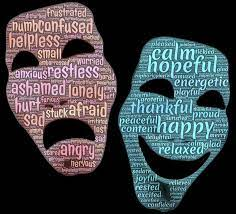
The masks - or veils - we wear


“Virtue has a veil, vice a mask.” - Victor Hugo

For the past two years, masks have been a big part of our lives. In a few weeks, masks will take center stage on Purim. This week, in Parshat Ki Tisa, we read about both veils and masks, and I think Hugo may be correct.


While we generally refer to the “Sin of the Golden Calf,” the Torah (Shemot 32:5) refers to the sin of eigel maseichah,” a molten or mask of a calf. The commentators explain this word as referring to a solid piece of metal forged by heat and shaped. In effect, it’s an attention-grabbing artificial surface, a mask.


At the end of the parsha (Shemot 34:33), Moshe’s face is shining as a result of his Divine encounter. This overwhelms the people, so Moshe takes to wearing a masveh, a veil, when not communicating with God or teaching Torah to the people.  


What is the difference between a mask and a veil? Masks conceal, divert, and distract. Veils cover, but they also reveal and inform. 


In the aftermath of the Golden Calf, the Torah reinforces the prohibition against idolatry. It ends by stating (Shemot 34:17), “Elohei maseicha lo ta’aseh lach - You shall not make molten gods for yourselves.” Why does it need to add another example of idolatry? We get the point already! 


While some commentators explain this as a timely allusion to the Jews’ most recent sin, Rabbi Mordechai Yosef Leiner, the 19th century Ishbitzer Rebbe and author of Mei HaShiloach, says elohei maseichah refer to thinking and acting in a way that is hampered by a constricted, unfocused, and impulsive mindframe. Elohei maseichah are not idols or molten images - we know idolatry is forbidden. Instead, it is a call to do our very best to live our lives in a way that is not guided by our worst natures. (Think about that Twilight Zone episode in which the patriarch has his family wear terrifying masks that reflect who they are - and turn their faces into those masks.) It is a difficult call to be our very best selves. No easy task.


Masks are, according to the Ishbitzer Rebbe, the vices that may, at times, cause us to want or do or say things we don’t REALLY need. Masks may be the distractions of social media or being so set in our ways that we can’t appreciate others who may be different. Masks - like vices - are destructive. 


How about veils?


Abarbanel notes that Moshe wore his veil to separate matters of holiness from everyday matters. He had to compartmentalize his life between revealing himself to God and teaching the people, and covering himself up when living an “ordinary” existence. That sounds more like a mask. Rabbi Shlomo Luntschitz, the Kli Yakar, sees the veil differently. Moshe, in his great humility, was embarrassed when people gaped at the radiance of his face. The veil technically covered, but it actually revealed something about Moshe’s virtues and helped him be the great teacher and leader he was. 


Each of us strives to be our most authentic selves (without masks). At the same time, our public persona may benefit from the veils which refract our best selves outward. Like Moshe Rabbeinu, each of us can choose what kind of veil we need to wear to most comfortably and effectively be the best that we can be.


In this season of face coverings, let’s be sure to wear those that generate the best version of ourselves so that we can feel good about who we are and present our best “face” to those around us.


Friday, February 4, 2022

Six More Weeks Until...

Punxsutawney Pinchas saw his shadow. There’s gonna be a second Adar.”


On February 2, we woke up to the fact that there are six more weeks until…PURIM!!! 😊 

I know you were thinking that, since Punxsutawney Phil saw his shadow, we’re in for six more weeks of winter. That may (alas) be true. But Groundhog’s Day was also Rosh Chodesh Adar Rishon, which means six weeks till Purim.
 
Two Adars can make things complicated in calculating a Bar Mitzvah or commemorating a yahrzeit. They may also provide a double dose of joy. The Talmud (Ta’anit 29a) teaches: Mi’shenichnas Adar marbim besimchah – When Adar arrives, we increase our joy. Some spoilsports would like to posit that only the second Adar gets a boost of simcha. After all, the source of the joy is Purim, and that is celebrated in Adar Sheini. I prefer to be machmir (strict) and follow the view that we should increase our joy in both months.
 
What’s with all this happiness in the first place? Why are we instructed to increase our happiness one month out of the year? If you’ll answer that it’s because of Purim, my response would be, “What about Pesach or Chanukah or Sukkot?” Why the month-long (or two months-long) exercise in increased happiness?
 
It’s not easy to be happy.
 
There is a vast literature about happiness. There is a happiness index, a ranking of happiest countries (Israel is #13; the US is #19), and a whole field of positive psychology. There is also no one formula for happiness. Each person is different.
 
Judaism values joy and happiness. (We could spend days discussing the difference between these two words as well as how to translate simchah into English.) If I could summarize Judaism’s approach to achieving happiness, it would be: It’s a process.
 
The last comment of Rabbi Moshe Isserlis (known as the Rema) to the first section of Shulchan Aruch is to quote Proverbs 15:15: “One that has a happy heart has a continual feast.” Is this really the way to end the book of Jewish law dealing with daily living? Actually, yes. After 697 chapters of how Jews wake up, pray, observe Shabbat, and celebrate holidays, Rema closes by stating that it’s the totality of life that will contribute to happiness. There are moments of celebration and joy, but a happy heart emerges from the vastness of life’s experiences.
 
It’s not easy to be happy. It’s a process that can be incredibly rewarding, but it’s a process. Jewish mysticism (Tikkunei Zohar 22) notes that the letters forming the Hebrew word “besimchah” (with joy) are the same letters that spell “machshavah” (thought). In a world full of distractions and shortened attention spans, this is a reminder that some things require attention, focus, and patience.
 
That’s why Judaism puts a month of joy on the calendar. Maybe it’s the right time of year – slower winter months, less going on, heading into a festive Purim-Pesach season – for us to increase our focus on happiness. As David Sable, puts it: It’s a month to practice being happy. This year, we have two months. The onset of two Adars of increased joy won’t necessarily make us happy. They do, however, give us extra time to consider what bring us joy and how we might be able to bring joy to others.

Friday, January 28, 2022

Idiomatic Antithesis & Law vs. Spirit


Have you ever heard of an idiomatic antithesis?

It is when one obeys the letter of the law but not the spirit. At times, one can obey the literal interpretation of the words or “letter of the law,” but not the intent of those who wrote the law. Conversely, when one obeys the spirit of the law but not the letter, one is doing what the authors of the law intended, though not adhering to the literal wording. This is a bit of a challenge in any legal system. 

Interpretation of the U.S. Constitution has historically been divided on the "Letter v. Spirit" debate. For example, after America’s founding, the Federalist Party argued for a looser interpretation of the Constitution, granting Congress broad powers in keeping with the spirit of some founders. They gave credence to the “spirit of the law” approach. In contrast, the Democratic-Republicans, who favored a limited federal government, argued for the strict interpretation of the Constitution, claiming that the federal government was granted only those powers enumerated in the Constitution and nothing not explicitly stated. They represented the "letter" interpretation. 

Today, Living Constitution scholars advocate a "spirit"-esque interpretative strategy, although one grounded in a spirit that reflects broad powers. Originalist or Textualists advocate a more "letter"-based approach, arguing that the Amendment process of the Constitution necessarily forecloses broader interpretations that can be accomplished simply by passing an amendment. 

It goes without saying that Judaism grapples with this issue as well. 

Rabbi Leibele Eiger of Lublin was the brilliant son of Rabbi Shlomo Eiger and grandson of the famed Rabbi Akiva Eiger. He veered, however, from the path of his fathers and went “off the derech.” He did not leave behind his observance. Even worse, he became a Chasid! This was a time when the ban against Chasidim was very much a reality, and Rabbi Shlomo Eiger, it is said, went so far as to sit shiva for his son.

R. Leibele Eiger was a mohel in Lublin. His practice was to engage in intense meditative practices for many hours before a circumcision, effectively delaying the ceremony until the afternoon. Some residents of his city complained about this, and R. Leibele felt it necessary to receive approval from a prominent rabbinic authority. Therefore, he wrote a letter to his cousin, Rabbi Shimon Sofer (son of the Chatam Sofer and also a grandson of Rabbi Akiva Eiger), asking for his approval. R. Shimon tried to maintain a careful balance between recognizing R. Leibele’s practice as valid while chiding him for his unconventional reasoning. In trying to balance the letter of the law and the spirit, he favored the letter.

This interesting exchange from the summer of 1865 highlights a tension in halakhah – the law versus the spirit. It is clear that Jewish law regulates every aspect of human endeavors. As mitzvot, these rules are commandments, obligations imposed upon us by God. They are, at the same time, our halakhah, our path to inspired and passionate Jewish living. What happens when the two seem to be in opposition?

This is an issue that comes up all the time for rabbis and parents, and it is a question we all wonder about at some point. Rabbi Aharon Lichtenstein raises the question: What if we were asked to choose between mechanical normative observance and non-halakhic spiritual dynamism? He answers that “we would, as commanded beings, unhesitatingly, albeit regretfully, opt for the former. But does anyone imagine that the Ribbono shel Olam confront us with such a cruel choice?” Our goal is to combine both – “the conjunction of spiritualized halakhah and disciplined spirituality; the fusion which enables us to realize the poetry and prose of ideal Jewish existence.”

Here are the sentiments of a Jewish parent on the challenge of getting a teen to shul:

“I can't believe the answer is to force them at all costs and we think this will be a long term positive for their religious life. The goal of having long term ritual practice for the sake of it, without it being a positive, and hoping to perpetuate it, generation after generation, does not seem like a very lofty goal. I would rather have them daven at home and have some feeling about it. I would take that trade if it was a choice.”

Pretty tricky, no?

The law is essential; the spirit inspirational. The revelation at Sinai requires of us to navigate both. It is not necessarily easy, but it is our path. In our religious lives, we might follow Jewish laws and customs because we feel like we WANT to, or we might do so because we feel like we HAVE to. However, the ultimate level is when we WANT TO HAVE TO - that is, we appreciate the necessity and beauty of making a commitment. This is the total commitment and responsibility accepted at Sinai. It is unique, complex, wondrous, at times frustrating and maddening – and we wouldn’t want it any other way.

Monday, January 17, 2022

Tu B'Shvat & MLK Day: Taking the Long View

Today is Tu B’Shvat, the Jewish New Year for trees. Today is also Martin Luther King Jr. Day, marking Rev. King’s birthday.

For some, these days have tremendous meaning and significance. For others, one or both of these days might pass with little or no notice or commemoration. I think both of these days teach all of us the importance of taking the long view.

Tu B’Shvat is most relevant to the agricultural laws of fruit trees. In recent years, it has become closely associated with our connection to the fruit of Israel and planting trees. The Talmud (Ta’anit 23a) tells a classic tale about trees and taking the long view.

“For his entire life, Honi HaMe’aggel was distressed over the meaning of the verse: ‘A song of Ascents: When the Lord brought back those who returned to Zion, we were like those who dream.’ (Psalms 126:1) He said to himself: Is there really a person who can sleep and dream for seventy years? How is it possible to compare the seventy-year exile in Babylonia to a dream?

One day, Honi was walking along the road when he saw a certain man planting a carob tree. Ḥoni said to him: This tree, after how many years will it bear fruit? The man said to him: It will not produce fruit until seventy years have passed. Ḥoni said to him: Is it obvious to you that you will live seventy years, that you expect to benefit from this tree? He said to him: That man himself found a world full of carob trees. Just as my ancestors planted for me, I too am planting for my descendants.

Ḥoni sat and ate bread. Sleep overcame him and he slept. A cliff formed around him, and he disappeared from sight and slept for seventy years. When he awoke, he saw a certain man gathering carobs from that tree. Ḥoni said to him: Are you the one who planted this tree? The man said to him: I am his son’s son. Ḥoni said to him: I can learn from this that I have slept for seventy years…”

Sound a little like Rip Van Winkle?

While the story has many lessons, one thing is clear: We need to take the long view. We should not expect instant gratification or an immediate return on our investment or efforts.

The same is true for the justice for which Martin Luther King, Jr. dreamed, fought, and died. He said, “Injustice anywhere is a threat to justice everywhere.” This is also a very Jewish concept. The Torah teaches (Devarim 16:20): “Tzedek tzedek tirdofe - Justice, justice shall you pursue.”

There are many causes calling for justice. It may be the issue of bigotry or racial or socioeconomic inequality or antisemitism. The Torah literally says we chase justice. It is a race. Running isn’t always easy. It is strenuous and tough. As the saying goes, “No pain, no gain.” There will be no justice unless WE run after it. It’s OK if it is hard or sometimes hurts. In a 1965 speech at Temple Israel in Hollywood, CA, Dr. King said, “We must always maintain a kind of divine discontent.”  

There is justice to pursue everywhere. We need to be on the lookout for what is wrong and what we can do to make it right. The Torah doesn’t tell us to catch justice; we are commanded to pursue it and seek it even if we cannot achieve it. 

Martin Luther King Day is a timely reminder for each of us to open our eyes, our minds, and our hearts, put on our justice shoes, and get in the race for justice. Tu B’Shvat is a timely reminder that it may take years, but we do what we can even if we won’t live to see the race won. Today is a day to reinforce the need for tolerance, patience, and respecting differences. Some of us may spend very little time with those who are different, but all of us can work to improve and expand our acceptance of difference.

May Rev. Dr. King’s legacy continue to inspire, and may we learn from the trees the patience we will need in realizing the dream of justice.

Friday, January 14, 2022

The Long Shorter Way

Ki karov hu ­– It was too close.” (Shemot 13:17)

The Jews could not take a shortcut. When Pharaoh let the people go, God did not lead them through the land of the Philistines, although it was nearer; lest they see war, change their minds, and wish to return to Egypt.

There’s something about shortcuts. They’re attractive. Who wouldn’t want to accomplish a challenge – personal, physical, financial – in the easiest way possible? Nevertheless, as the Jews experience their first moment of freedom, God instructs them to take the long way.

If something matters, it cannot be attained easily or quickly. The optimal path is the long shorter way.

The Talmud (Eruvin 53b) recounts a teaching of Rabbi Yehoshua ben Chananiah:

“Once a child got the better of me. I was traveling, and I met with a child at a crossroads. I asked him, 'which way to the city?' and he answered: 'This way is short and long, and this way is long and short.'

"I took the 'short and long' way. I soon reached the city but found my approach obstructed by gardens and orchards. So I retraced my steps and said to the child: 'My son, did you not tell me that this is the short way?' Answered the child: 'Did I not tell you that it is also long?'"

In life, nothing is simple. It may seem short, but it will turn out to be long. It might seem long, but it’s really the shorter way. If it seems too good to be true, it probably is.

In his Tanya, Rabbi Schneur Zalman of Liadi sets down the fundamentals of the Chabad-Chassidic approach to life. He defines his work as follows:

"This book is based on the verse (Devarim 30:14), 'For the Torah is something that is very close to you, in your mouth, in your heart, that you may do it'-- to explain, with the help of God, how it is indeed exceedingly close, in a long and short way."

What is a short way and what is a long way?

Rabbi Menachem Mendel Schneerson, the late Lubavitcher Rebbe, teaches that faith is a short path. If you have faith, everything falls into place. As the saying goes, “For the believer, there are no questions.” The way of mind is the long path. “It is winding, steep, tedious and long as life itself. It is rife with struggles, setbacks and frustrations. But it is a road that leads, steadily and surely, to the aspired destination.”

Which path do we follow – the long or the short? How do achieve our goals? What is the best path to self-fulfillment, spiritual accomplishment, helping others, and being the best we can? Like the Jews leaving Egypt, the shortcut is appealing but not the way to go. Ultimately it is the path that is long and short that we need to travel.

Friday, January 7, 2022

Feeling Darkness & Finding Light


It has been estimated that 11 percent of the U.S. population is afraid of the dark. This is even more common than a fear of heights.

“Darkness impairs our vision, quite literally, and this is inherently uncomfortable,” explains Dr. Alicia H. Clark, Psy.D. “We aren’t afraid so much of the dark as we are afraid of what is in the dark we can’t see.” When it’s dark, we are not sure of what is in front of us or when that darkness will lift to provide some clarity. It is the uncertainty which is frightening. “Uncertainty is a breeding ground for anxiety, and darkness is full of uncertainty,” says Krystal M. Lewis, a clinical psychologist at the National Institute of Mental Health.

I can relate.

A few years ago, I participated in one of the “Dark Workshops” held in the Na Laga’at Center in Jaffa Port. Participants sit in total darkness and, among other experiences, attempt art projects without being able to see at all. I couldn’t even see my hand right in front of my face. I started getting very anxious - literally, physically feeling as if there was a weight on me. It freaked me out a little.

Being in darkness is much more than the absence of light. We’ve seen this before: in plague of Choshech, Darkness.

V’yameish choshech – A darkness you can feel.” (Shemot 10:21)

What kind of darkness was this? Rashi explains that this darkness was darker than dark. Picture the darkest night you can imagine, the plague was darker than that. He further explains that there was an emotional aspect to the plague of darkness. It was a “darkness of gloom.” The plague was very depressing. There was also a physical component. The subsequent verse states that the Egyptians could not get up. The darkness was so powerful that it kept people immobilized. Darkness, the inability to see what comes next, left the Egyptians so emotionally drained, they were unable to move. (This recalls the “Dementors” of Harry Potter fame, who sucked all the joy and happiness from one’s soul leaving behind a shell of a person.)

The darkness may have covered up something even “darker.” There is a Midrash that the darkness hid the deaths of those wicked Jews who did not believe in the possibility of redemption. They died and were buried under the cover of darkness so that the Egyptians wouldn’t know. (A more positive Midrashic explanation for the darkness is that it allowed the Jews to locate their Egyptian neighbors’ valuables so they could request them.)

No matter how you “look” at it, we can understand the adverse physical, emotional, and spiritual impact of “Darkness” and darkness. In particular, these last two years have provided us with an up-close and personal encounter with a darkness of isolation, separation, and, sometimes, feelings of desperation that have physically harmed us and kept us apart.

And yet…

U’lechol Bnei Yisrael haya ohr b’moshvotam - Israelites enjoyed light in their dwellings.” (Shemot 10:23)

The plague of Darkness – as bad as it got – can be chased away with just a little light. The plague was, essentially, a punishment for the Egyptians. It was part of a ten-step process to discipline them for enslaving the Jewish nation. Like all the plagues, it was also a demonstration for the Bnei Yisrael then and us today of God’s role in our lives. There can – and will be – darkness. It may manifest itself as the absence of light, anxiety, depression, or worse. At the same time, the darkness makes way for the light that can be found in our dwellings. We may need to search harder and look a little closer, but it shines on.