Monday, July 31, 2017

Food for Thought this Tisha B'Av (Since You Can't Eat)


A few years ago, my son asked: Why do we fast on Tisha B’Av?  He knew the answer is to commemorate the destruction on the Beit HaMikdash.  What he was really asking was, “What is the relevance of Tisha B’Av for us today?”

Tisha B’Av was established because of the tragedies and difficulties of the past.  But what about the present?  We have Israel.  Things are far from perfect everywhere, but Jews have it better today than any time since the Temple stood.

So, why DO we fast and recount the tragedies of the past and sit low to the ground?  How does Tisha B’Av relate to us?

Our Sages were aware of this issue. Here are three statements of the Sages in which they teach how the Temple’s destruction may be relevant for all time.

1)  The Talmud in Berachot 32b states in the name of Rabbi Elazar:

מיום שחרב בית המקדש נפסקה חומת ברזל בין ישראל לאביהם שבשמים

From the day that the Temple was destroyed, a wall of iron has separated Israel from their Father in Heaven

The Temple was an inspiring location, one in which daily miracles occurred.  When the Beit HaMikdash stood, if you ever questioned the existence of God or God’s role in your life, you could go to Jerusalem and feel God’s presence.  That was one of the purposes of the three pilgrimage festivals on which everyone would go to Jerusalem: to recharge the spiritual batteries.

What about today?  Where should we go when we have religious questions or feelings of doubt? 

On Tisha B’Av, we need to come to terms with a more challenging religious environment.    

2)  The Talmud in Sota 48a states:
מיום שחרב בהמ”ק – אין יום שאין בו קללה           

From the day that the Temple was destroyed, not a day goes by without some sort of curse.

There is pain in the world: the pain of those who are ill, isolated or marginalized.  There is the k’lalah of rising anti-Semitism around the globe and uncertainty that many Jews endure.  There is the continuing danger to Israel from all kinds of threats.  There is insecurity here in America: violence, inequality, a loss of morality, and a sense of being adrift. 

On Tisha B’Av, we have the opportunity – the responsibility – to confront that pain and resolve to address it the best we can.

3)  The Midrash states:
מיום שחרב בהמ”ק נתמעט השלום

Since the day that the Temple was destroyed, peace has been diminished

The modern Jewish community is noteworthy as much for our dwindling affiliation rates as we are for our divisiveness, strife and discord amongst the Tribe.  I don’t think I need to (or want to) list the ways in which our community disagrees.  It is so unfortunate that it takes a mortal threat for Jews to put aside our differences.

On Tisha B’Av, we are reminded just how divided and fragmented we can be.

Tisha B’Av has always been about much more than the Temple.  From the time of the Temple’s destruction, we have faced the complexity of religious experience, the curses, and the loss of peace.

If we have difficulty mourning the historical tragedies, their reverberations provide plenty upon which to reflect and be sad on Tisha B’Av.

There is another event that took place on Tisha B’Av.  According to the Sages (Midrash Eicha Rabba 1:51), Mashiach was born on Tisha B’Av.

What does this mean?  It is not an historical event or an aspiration.  The intent is that every year, Tisha B’Av generates a new impetus for redemptive action.  In addition to mourning that which has been destroyed, Tisha B’Av is a time to rebuild.

May this Tisha B’Av usher in different types of building:
A building of our spirituality and connection to God
A building of peace: within our families, our community, and the world
A building of lives committed to mindfulness, emotion, and responsiveness

This kind of Tisha B’Av observance will bring each of us that much closer to redemption. 

Friday, July 21, 2017

Radiohead, The Kotel & We Need To Talk

I am in Jerusalem participating for a second summer in the Shalom Hartman Institute’s Rabbinic Leadership Initiative (RLI), which brings together 26 North American rabbis of different denominations to study together and explore some of the critical issues facing Judaism and Israel today.

There’s a lot going on in Israel.  (When is that not the case?)  


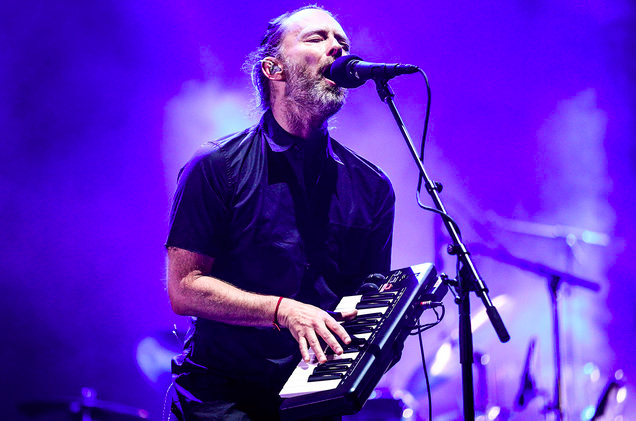
On Wednesday night, the British rock band, Radiohead, played a sold-out concert in Tel Aviv.  It was a big story as the group had been under intense pressure to cancel the concert over Israel’s policies regarding the Palestinians.  Radiohead responded to the pro-BDS pressure campaign that their playing in Israel does not signify approval of the government’s policies.

I can’t say I’m a fan, but Radiohead’s Thom Yorke made a great point that can apply to the harsh disagreements which seem to always “rock” the Jewish community.

Music, art and academia is about crossing borders not building them, about open minds not closed ones, about shared humanity, dialogue and freedom of expression.

Why can’t Judaism and Jewish ideas - even divergent ones - accomplish something similar?

It seems like Jews cannot tolerate that others have differing views.  If there is ever going to be progress or even just civility in the Jewish community (or in any community), we need to start having less shouting and more talking.  Our communities need to stop making comments about “the other” and start finding ways to engage each other.


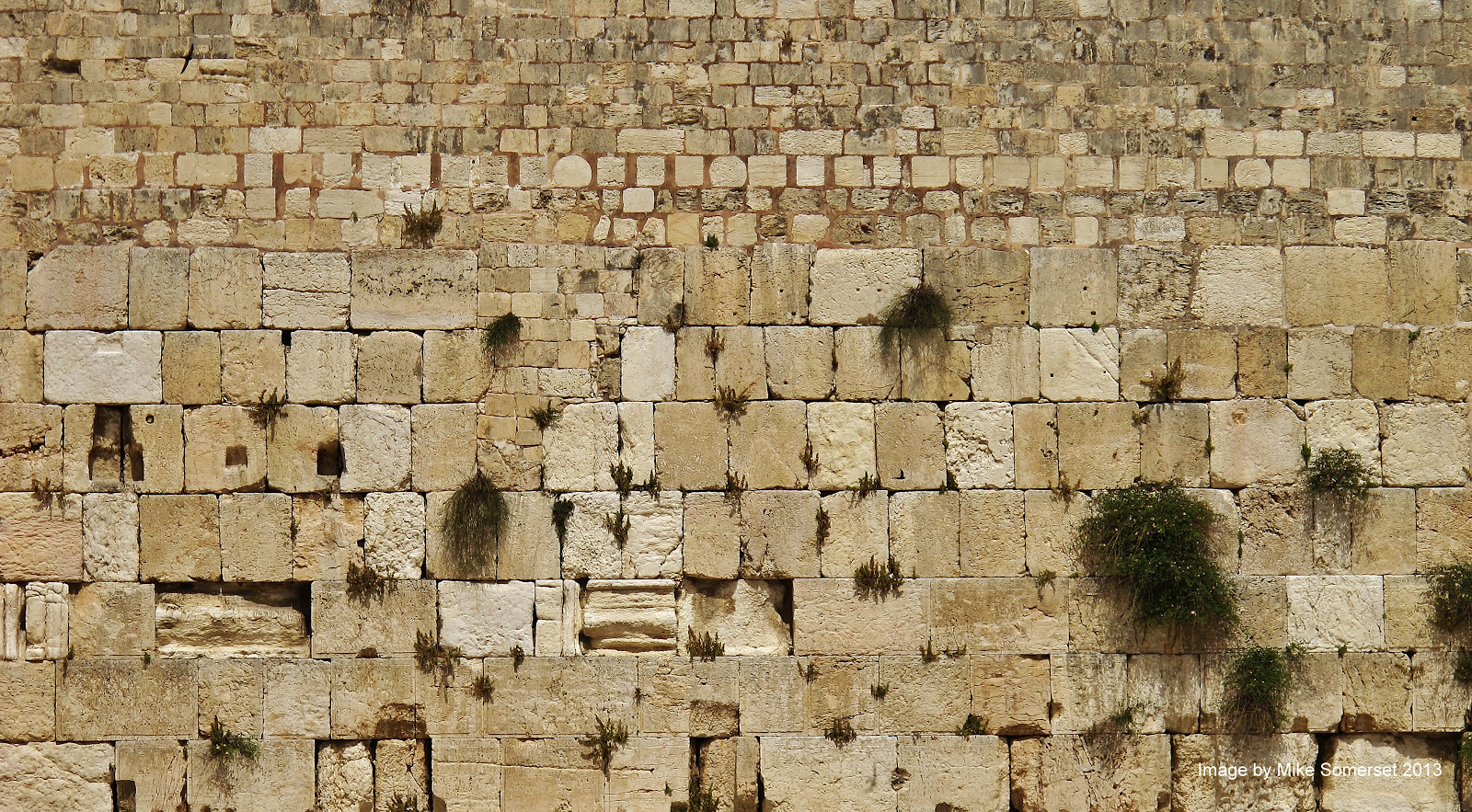
Recently, the Israeli government suspended an agreement to expand and enhance the area near the Kotel for non-Orthodox prayer services as well as to appoint an interdenominational commission to oversee the area.  It was a terrific compromise for a very complex issue, and it was abandoned due to coalition politics.

This decision angered the leadership of much of the Diaspora Jewish community and has led to an angry war of words between both sides.

Does the suspension of the Kotel Compromise really mean that the State of Israel doesn’t care about American Jews?  Can’t reasonable Jews disagree over the propriety or importance of egalitarian prayer?

Chareidim are intent on denying any ounce of legitimacy to non-Orthodox Jews or, really, any Jews with whom they disagree.  They should try and understand where non-Orthodox are coming from instead of writing them out of the Jewish people.  Non-Orthodox Jews should try and understand the utra-Orthodox position as well as recognize how the average Israeli may not view egalitarian prayer at the Kotel as an important issue.

I get it.  I think the Israeli government decision is terrible.  I think there needs to be a path for non-Orthodox Jews to express themselves religiously in the State of Israel.  I think the Chief Rabbinate is deeply flawed and in need of replacement.  

At the same time, I want to move forward.  There is too much anger surrounding these issues and not enough appreciation for the need for genuine conversation and mutual respect.
There are many areas of disagreement in the Jewish world.  Reasonable people can disagree about the importance or necessity of an egalitarian prayer space at the Western Wall.  How Judaism confronts the changing dynamics of relationships, family life, and sexuality in the modern word are complex issues.  At the same time, is anything positive accomplished with shouts, insults, threats, or exclusion?

The appropriate response is to engage.  

The Talmud (Eruvin 13b) famously teaches that the bat kol (heavenly voice) sided with Beit Hillel in their disputes with Beit Shammai.  Even though “eilu v’eilu divrei Elokim chaim - these and these are the words of the living God,” the law follows Beit Hillel.  Why is this is so?  If both sides are the words of the living God, why follow one and not the other?  The Talmud answers that Beit Hillel would study and teach both their opinion and that of Beit Shammai, and moreover, they would teach the view of Beit Shammai before their own.

We can be committed to our own views, but we are more effective when we include consideration and discussion with those who maintain an opposing view.  It worked for Beit Hillel, and it can work for us.

Dr. Tal Becker is a fellow at the Shalom Hartman Institute in Jerusalem and also serves as principal deputy legal adviser at the Israeli Ministry of Foreign Affairs.  As a senior member of the Israeli peace negotiation team, he is no stranger to disagreements.  He quotes the Rambam (Guide for the Perplexed, Part 1, Chapter 5) that a person “should not decide any question by the first idea that suggests itself to his mind, or at once direct his thoughts and force them to obtain knowledge of the Creator…”

Humility and patience are important traits in our intellectual endeavors and should also be brought to our arguments.  We shouldn’t view our disagreements as zero sum exercises with one side winning and one side losing.  Becker writes:

We should want a Jewish debate that reflects the pluralism, complexity and contradictions of our tradition and experience.  And we should engage in argument, not mainly in order to persuade, but in order to refine and broaden our understanding.  This does not mean the argument should be any less rigorous, or that poorly reasoned positions should not be weeded out.  It means that the objective of an argument is to learn and not to win. It is a pedagogical exercise, not a competitive one.

Professor David Hartman, founder of the Shalom Hartman Institute, had a similar approach:
My desire is to speak to all Jews.  This does not mean that if I speak to them, I legitimate them...I talk with Jews because if I do not talk with them, I cannot influence them.  And not only do I talk to them, I also listen to them.  For if they do not feel that I listen to them and take them seriously, they are not prepared to listen to me.
(“Judaism in a Secular Society” in Orthodoxy Confronts Modernity, p. 27)

The battles being waged in the Jewish world will not be won with angry pronouncements.  They won’t be won at all if they are viewed as battles that need to have winners and losers.  We should not focus on who screams louder or makes the more outrageous or even heartfelt statements.  

The path forward is pretty simple.  In the words of the late Joan Rivers, “Can we talk?”

Each of us should find someone with whom we disagree and ask them to explain their position.  Don’t let our understanding of opposing positions come from the most egregious quotes and soundbites that make it to the media.

In addition, we would benefit from exploring issues in greater depth.  What are the sources relating to the Kotel or conversion or the Middle East peace process?  Might there be legitimate reasons behind the views of those with whom we disagree so vehemently?

The issues we face are the future of Judaism.  We need to start a conversation between differing worldviews about what matters to each of us.  We need to have the humility to acknowledge there are views which differ from our own.  We need to open our hearts to those with whom we disagree in order to deepen our commitment to our own values.  This can lead to a better understanding between people and genuine progress towards creating a positive relationship between different segments of the community.

Let’s stop shouting past each other and begin engaging with one another.

Friday, June 23, 2017

Reading "Right to Left" on Intermarriage


Golda Meir had many interactions with Secretary of State Henry Kissinger during and after the Yom Kippur War.  The Prime Minister marshaled many reasons for assisting Israel - the country’s geo-strategic importance, its promotion of democracy, its attitude toward the Soviet Union, but she also appealed to Kissinger’s identity as a Jew.

Unimpressed, Kissinger responded, “I would like to inform you that I’m first an American citizen, second Secretary of State, and third a Jew.”

To which Meir replied, “In Israel, we read from right to left.”

I often quote this story in discussing the weakening of Jewish identity and connection to Israel.  For example, a recent headline in the Times of Israel proclaimed, “Jewish Millenials Putting Zionism Second and America First.”  

Do we let our modern values shape our outlook?  Do we read “left to right?”  Or deep down, does our Judaism guide us?  Do we read “right to left?”

Regardless of ritual observance or politics, a strong connection to Judaism or Israel requires looking at the world through Jewish lenses.  As with all of life’s decisions, we may choose to ignore or veer from that Jewish perspective, but Judaism needs to be the deeply rooted starting point if it is to remain an important part of our identity. 

More and more Jews – sincere, well-intentioned, and passionate – view the world from “left to right,” with an outlook that is mainly guided by their Western and not Jewish values.

I believe that reading “left to right” or “right to left” is at the core of the recent trend in rabbis questioning and abandoning the longtime opposition to intermarriage.

Judaism does not permit a Jew to marry a non-Jew.  In addition to being against Jewish law, it harms the Jewish future.  Regardless of the cases where children of such marriages possess a strong Jewish identity, such stories are the exception and not the norm.

As strongly as I oppose intermarriage, I welcome any family that seeks a portal to God, Torah, Israel and the Jewish people.  I encourage all forms of Jewish identity.  It is not my place to tell someone whether they are Jewish.  I cannot validate the status or officiate at a wedding unless the standards of Jewish law are met, but I welcome all Jews - and interested non-Jews - seeking to explore Judaism.

The move by rabbis who advocate a commitment to Jewish law and tradition to officiate, religiously celebrate, or validate intermarriages saddens me.  To hear sentiments that this shift is “grounded in Jewish tradition and inclusiveness” or motivated by an “unwavering commitment to the Jewish future” indicates that Jewish leaders are increasingly reading from “left to right.”

I understand the motivation.  More and more Jews are marrying non-Jews.  How can we keep them at arm’s length and tell them we respect and love them while not validating their marriages?  I don’t want to withhold a “mazal tov” from a cherished congregant whose child is marrying someone who is not halakhically Jewish.

But Jews need to read “right to left.”

There are standards.  Judaism makes demands of us. 

This week, we read about Korach’s rebellion, his challenge to Moshe’s authority.  Korach had a valid point.  He claimed that everyone is holy.  Why should Moshe claim all the authority?  According to the Midrash, Korach also highlighted the inconsistency and absurdity of Jewish law.  If the mezuzah signifies a Jewish home, shouldn’t it be unnecessary on the doorway of a house full of Jewish books?  Why should a blue tallit require a blue strand on the tzitzit fringes?

There are great questions!

Judaism doesn’t always make sense.  Korach tried to read the Torah from “left to right.”  Jews must read from “right to left.”

The challenge for modern Jews is to find authentic Jewish pride and passion in being Jewish.  Without a deeply-felt emotional connection – without reading from “right to left,” Judaism will lose out to American, Western, or progressive values.  These values can be positive ones, but they must not be allowed to overshadow or supersede our Jewish values.

Rabbi Ephraim Buchwald, a pioneer of Jewish outreach and engagement and director of NJOP, recently spoke of the need to be passionate about Judaism.  He said: “If you want moderate children, be passionate.  If you take a moderate approach to Judaism, your kids will be causal.  If you are casual about Judaism, your grandchildren will be Episcopalian.”

Rabbi Buchwald said this to make a point.  We cannot predict the future.  What I am certain of is that casual Jews are not living the kind of Jewish life that will likely inspire the next generation of passionate Jews.

We need more Jews living and teaching an authentic, serious, passionate Judaism.  We need to more clearly recognize that our mission in this world is anchored in God’s Torah and not Western values.  Sometimes, we need to say no, to stick to our standards, and act in ways which don’t make sense.

We need to read from “right to left.”

Friday, May 19, 2017

Bikers Making Kiddush in Jew Land


This is Aryeh Ben Yaakov.  Aryeh is from Cleveland, Ohio, and he made aliya in 1961 at age 21.  After his IDF service as a paratrooper, he settled in Kibbutz Misgav Am which is located literally on the border with Lebanon.  In this picture you can see this Hezbollah flag as a tiny green dot in Lebanon just over the fence of the kibbutz.


Aryeh is a prolific and passionate spokesperson who meets with many of the groups that visit Misgav Am to better understand the dangers of living in a border community as well as to see firsthand the Zionist spirit and dedication of those who live there.  I have heard Aryeh on numerous occasion, and I visited with him on Tuesday along with the Ramaz 8th graders on their class trip. 

Aryeh doesn't like to talk too much about himself, but he is not shy about why he lives in Israel or what the Jewish State is all about.  As usual, though, he left his listeners with a lesson in Jewish pride and a certainty in the justness of Israel.  I think it's a critical lesson for all Jews, and I'm glad my students heard it loud and clear. 

"Why do I live in Israel?  I'm Jewish...This is home for the Jewish people.  It's a miracle.  It's wonderful...Israel is Jew Land...Whenever you come, we'll be ready for you."

We all know that there is a lot about Israel that is complicated.  At the same time, Israel is a special place.  We must remind ourselves of this, while making sure our children (and all around us) hear - and feel - this unique quality.

The Torah predicts this phenomenon in our parsha. 

וישבתם לבטח בארצכם
And you shall dwell in safety in your land. (Vayikra 26:5)


The Midrash explains:


וישבתם לבטח בארצכם – בארצכם אתם יושבים לבטח ואין אתם יושבים לבטח חוצה לה.
In your land you shall dwell in safely, but you will not dwell in safety outside of it.

What exactly does this mean?   Why can’t we live securely outside the land?  Even with all that is going on, I still feel pretty safe as a Jew in America. 

וישבתם לבטח בארצכם    is not only about safety.  It is a reality that the natural state for the Jew as a Jew is in Israel.  It is in Israel that Jewishness permeates everyday life, where it is part and parcel of one's identity.  It is in Israel where we are naturally and organically Jewish.

This is not to say that one can’t be a proud, passionate Jew elsewhere in the world.  I’d like to think that we do a pretty good job here, but Israel is the land of passion and pride.  Israel is the place that attracts Aryeh Ben Yaakov's, that inspires American high school graduates to spend a year in the IDF or national service before college, and that elicits pride just by setting foot in the country.  Israel can provide an automatic and instantaneous infusion of religious spirit and passion for laid back teens, and it is only in Israel where bikers naturally make Kiddush.


A former neighbor of mine made Aliya to Israel and
spent a weekend with his family at a Field School in Midreshet Sde Boker - near Kibbutz Sde Boker, the former home of David Ben Gurion.  Shortly after arriving on Friday, they heard the roar of motorcycles and watched as a large gang of bikers rode into the parking lot.  It was a group of graying, beefy older men riding a very fine collection of classic bikes – and they were all speaking Hebrew.  All of a sudden, my friend is 

approached by one of the bikers who wanted to apologize in advance for any noise they might need to make on Shabbat morning when they were planning on leaving to continue their ride.  Bikers with manners.

After Friday evening services in the shul, the family went to the dining hall for the Shabbat meal.  It was a communal dining hall, so that is where everyone ate.  And in walk the bikers.

The leather was gone, and they were now wearing clean t-shirts and blue jeans tucked into dusty engineer boots.  They sat down right near my friend’s family.  All of a sudden, one of the bikers stood, filled, his cup with wine, and the rest stood up on cue.  They all took the neatly folded pink dinner napkins from their place settings, and perched them carefully on top of their heads as makeshift yarmulkes, while the leader began making Kiddush.  

Kiddush recited by a bunch of “secular” Israeli weekend motorcycle warriors.  My neighbor said to his wife, "I think that has to be the holiest Kiddush I've ever heard".

It is a cute story, which reinforces for us that things are very different in Israel.  It is a reminder of what remains at the core and foundation of Israel.  In Israel, Judaism is natural.  Israel is the place where Judaism infuses and inspires the religious, the secular, the cynical, the student, and the bikers. 


Friday, May 12, 2017

What Exactly Do We Celebrate on Lag B'Omer?


What is Lag B’Omer?

Lag B’Omer, the 33rd day of the Omer (it falls out on Sunday this year), is a festive day on the Jewish calendar.  For many, it marks the end of the subdued behavior and no haircuts of the Omer period.  It is celebrated with outings on which children play outdoors – traditionally with bows and arrows, bonfires, parades and other joyous events.  Many people travel to visit the resting place (in Meron, northern Israel) of the great sage and mystic Rabbi Shimon bar Yochai, the anniversary of whose passing is on this day.


Say what???

Where does all this come from?  Why the joy?  Why the bonfires?  Why anything on a day which is not mentioned ANYWHERE in the Talmud or early Jewish sources?

One reason recorded is that Rabbi Akiva’s students, who died during the Omer period, stopped dying on the 33rd day of the Omer.  If we are sad during the Omer period due to our continuing grief over the loss of all of the Torah of Rabbi Akiva’s students, then the cessation of their dying is a reprieve from that grief.  The day became memorialized as a day of relief and celebration.

A second source for Lag B’Omer being a happier day is based on a number of Kabbalistic explanations that find spiritual significance in the 33rd day of the Omer.  Since the day is spiritually elevated, it deserved to be celebrated.  The most well-known of these spiritual reasons is the tradition that Lag B’Omer is the yahrzeit of Rabbi Shimon bar Yochai, whose teachings form the basis for the Zohar, the primary book of Jewish mysticism.  On this yahrzeit, we celebrate the “light” of the Torah that Rabbi Shimon revealed.

This is all very nice, and I enjoy a nice bonfire just as much as the next person, but do these reasons rate a holiday?  I am not alone in my skepticism.  Not everyone is so enthusiastic about Lag B’Omer.

Rabbi Moshe Sofer (1762-1835, Hungary) questions whether it is permissible to establish a new holiday that is not based on any type of miracle.  (So Yom Ha’Atzmaut and Yom Yerushalayim are safe!)  Rabbi Yosef Shaul Nathanson (1808-1875, Poland) also objects to the celebration on similar grounds.  He notes that the proper response on a yahrtzeit is to fast and not to celebrate.  He also questions the practice of making bonfires to burn clothing as it seems like it is bal tashchit, wasteful.

So where does that leave us?  What is the message of Lag B’Omer?

As usual, my Friday Torah session with Ramaz Third Graders shed some light on the matter.

The two major sources for celebrating Lag B’Omer are the end of Rabbi Akiva’s students dying and Rabbi Shimon bar Yochai’s passing.  Both of these episodes teach an important lesson of continuity. 

How did the passing of Rabbi Shimon impact his students?  They rededicated themselves to spreading his teaching. 

What did Rabbi Akiva do after losing his students?  He immediately taught new ones. 

Lag B’Omer is the holiday of moving forward.

This may be why the day revolves around children.  The children have outings, and the young children get their first haircuts.  On Lag B’Omer, we look to tomorrow.

I realize this may not fully answer the question, but it makes me smile and gives me a reason to celebrate.

Monday, May 1, 2017

Put Yourself in Their Shoes to Really Celebrate Israel!


There is something so overwhelmingly emotional about Yom HaZikaron and Yom HaAtzmaut.  As Israel transitions in a mere 24 hours from somberly remembering those killed establishing and defending the State to joyously celebrating her independence, we ride a roller coaster of emotions.  Personally, it is so powerful to see the images and watch the video clips from Israel today.  Naama pointed out how even seeing the Ramaz students commemorating Yom HaZikaron in their assembly with a recording of the siren is powerful enough to move one to tears.

I don’t think any of us who has grown up with a State of Israel can appreciate just how incredibly blessed we are.  Today, we take so much for granted that we need to try and put ourselves in the shoes of those who did NOT know what it was like to live with a State of Israel.

Can you imagine what it was like to survive the Holocaust and then live to experience the miracle of a State of Israel?!?  Would anyone in 1944 even dream that Israel would exist let alone accomplish all that she, thank God, has accomplished in 69 years?

Rabbi Yisroel Zev Gustman (1908-1991) may have been one of the greatest rabbis of the 20th century that nobody has ever heard of.  While he avoided the limelight and was therefore unfamiliar to the general public, he was well known to connoisseurs of Torah learning, and his writings are experiencing something of a renaissance in yeshivahs today.

His meteoric rise from child prodigy to the exalted position of religious judge in the Rabbinical Court of the famed Rabbi Chaim Ozer Grodzinski at the age of 20 was the stuff of legend -- but nonetheless fact.  While a long productive career on the outskirts of Vilna could have been anticipated, Jewish life was obliterated by the pain of World War II.  Rav Gustman escaped, though not unscathed.  He hid among corpses.  He hid in caves and under bushes.  He hid in a pig pen.  He somehow survived.

After the war, and a brief sojourn in America, Rav Gustman became the head of a yeshiva in the Rechavia section of Jerusalem, Netzach Yisrael.  He taught a small group of loyal students six days a week.  But on Thursdays at noon, the study hall would fill to capacity: Rabbis, intellectuals, religious court judges, a Supreme Court justice and various professors would join along with any and all who sought a high-level Talmud class.  When Rav Gustman delivered a lecture, Vilna was once again alive and vibrant.

One of the regular participants was a professor at the Hebrew University, Robert J. (Yisrael) Aumann.  Once a promising yeshiva student, he had eventually decided to pursue a career in academia, but made his weekly participation in Rav Gustman's class part of his weekly schedule.  The year was 1982.  Once again, Israel was at war. Soldiers were mobilized, reserve units activated. Among those called to duty was a reserves officer, a university student and young father who made his living as a high school teacher: Shlomo Aumann, Professor Aumann's son. On the eve of the 19th of Sivan, in particularly fierce combat, Shlomo fell in battle.

Rav Gustman mobilized his yeshiva: All of his students joined him in performing the mitzvah of burying the dead.  At the cemetery, Rav Gustman was agitated.  He surveyed the rows of graves of the young men, soldiers who died defending the Land.  On the way back from the cemetery, Rav Gustman turned to another passenger in the car and said, "They are all holy."

Another passenger questioned the rabbi: "Even the non-religious soldiers?"

Rav Gustman replied: "Every single one of them."  He then turned to the driver and said, "Take me to Professor Aumann's home."

The family had just returned from the cemetery and would now begin the week of shiva -- mourning for their son, brother, husband and father.

Rav Gustman entered and asked to sit next to Professor Auman.  He spoke, first in Yiddish and then in Hebrew, so that all those assembled would understand:

"I am sure that you don't know this, but I had a son named Meir.  He was a beautiful child.  He was taken from my arms and executed.  I escaped.  I later bartered my child's shoes so that we would have food, and I gave it away to others.  My Meir is a kadosh -- he is holy -- he and all the six million who perished are holy."

Rav Gustman then added:

"I will tell you what is transpiring now in the World of Truth in Gan Eden -- in Heaven.  My Meir is welcoming your Shlomo into the minyan and is saying to him 'I died because I am a Jew -- but I wasn't able to save anyone else.  But you -- Shlomo, you died defending the Jewish People and the Land of Israel.'  My Meir is a kadosh, he is holy -- but your Shlomo is a Shaliach Zibbur -- a Cantor in that holy, heavenly minyan."

Rav Gustman continued: "I never had the opportunity to sit shiva for my Meir; let me sit here with you just a little longer."

Professor Aumann replied, "I thought I could never be comforted, but Rebbi, you have comforted me."

Rav Gustman and his wife would attend an annual parade held in Jerusalem before Pesach.  They would join their fellow spectators and excitedly watch the children march through the streets.  When asked by a colleague why he participated in this annual event, he replied, “We who saw a generation of children die, will take pleasure in a generation of children who sing and dance in the streets of Jerusalem.”     

Rav Gustman and many others of his generation are the perfect guides for us.  He and many like him (even though not Zionists) felt a love for the land of Israel, for the people of Israel, and for the heroes of Israel.  It is a love we need to make sure to absorb within ourselves and pass on to our children.

This Yom HaAtzmaut, take a moment to reflect on how blessed we are to have as our reality an Israel our ancestors couldn’t even dream of.  Share this feeling with family and friends. 

Ashrei she’zachinu l’kach – How fortunate are we to have merited this!

Friday, March 10, 2017

The Relationship between Cheesecake and Hamantashen


Growing up, my father would often say, “On Sukkot, you can eat WHAT you want, but you can’t eat WHERE you want.  On Pesach, you can eat WHERE you want, but you can’t eat WHAT you want.  Shavuot is the best holiday since you can eat WHAT you want and WHERE you want it.”

Now, the holidays are about much more than what’s on the menu (or are they?), but Shavuot does stand out in the cycle of holidays for its lack of specific rituals or symbols.  If we go around the year, we start with the shofar announcing a new year on Rosh Hashanah along with all of the accompanying sweet symbolism.  Yom Kippur is unforgettable for the fasting and the amount of time spent in synagogue.  Sukkot has the sukkah and the four species.  Chanukah has the lighting of the candles commemorating a miracle.  (The presents came later.)  Passover is the “King of Rituals” with matzah and the many features of the Seder.

Shavuot?  Yes, there are customs like cheesecake, but Shavuot is, fundamentally, “just” a holiday commemorating receiving the Torah at Sinai.  In my experience, it is the one that gives observant Jews the hardest time with their bosses when they ask to take it off since it is the least recognizable of the Jewish holidays. 

Why don’t we make a bigger deal and have rituals celebrating Shavuot?  After all, without the Torah received on Shavuot, there would be no Judaism!  The answer is that Torah is life.  More accurately, Torah is the mechanism for living a meaningful and sacred life.  To commemorate the Torah, one doesn’t need fancy rituals or recipes.  To commemorate Torah, we recommit to living it.

The best things in life may not be free, but the greatest thing in life is to purposefully live it.

There is one holiday omitted from the list above.  Nowadays, we make a big deal about it with costumes and fancy gift baskets, but Purim, at its core, is celebrated in a very everyday way.  The Megillah teaches that we celebrate Purim by observing four mitzvoth: we read the Megillah that recounts the Purim story; we have a festive meal; we share gifts of food with friends; and we make sure to help out those in need.  Yes, these are rituals, but I can’t think of a more natural way to celebrate than telling a story, eating, sharing, and helping.

Rabbi Dr. Abraham Twerski, a noted rabbi and psychiatrist, notes that what makes Purim unique is that there was nothing supernatural about it.  Everything seemed to unfold in an ordinary fashion, yet God was quite active behind the scenes to bring about the salvation of the Jews.  The Purim narrative includes a drunken king, a refusal by the queen earning her a death sentence, a Jewish beauty becoming the next queen, a villain, a hero, a couple of parties, a hanging, and a victory.  Hardly the stuff of miracles!  In reality, though, we can find God pulling the strings behind the scenes.

The holiday of Purim – like Shavuot - is about celebrating the way we live our lives.

And here’s the kicker.  In Megillat Esther (9:27), we read:
קִיְּמוּ וְקִבְּלו הַיְּהוּדִים עֲלֵיהֶם וְעַל זַרְעָם וְעַל כָּל הַנִּלְוִים עֲלֵיהֶם...

The Jews ordained and took upon themselves and upon their seed and upon all those who join them…

The Talmud (Shabbat 88a) comments that this verse in Esther means that: kiymu ma she-kiblu k’var – The Jews during the time of Purim accepted what they had accepted previously.  This refers to the Torah.  The Jews accepted the Torah at Sinai, and they accepted it again during the time of the Purim story.

What does this mean?

Among the possible explanations, we learn that, like Sinai and Shavuot, Purim is a reaffirmation that Judaism is living.  The Torah contains many rules and obligations.  At the same time, Judaism is meant to be integrated into our everyday lives to uplift and sanctify what we do and who we are.

The Jews in Persia may have strayed from this message.  It is quite easy to lose sight of the sacred and meaningful within the hustle and bustle of the everyday.  At the height of their salvation from the depths of despair, they reaffirmed the necessity of bringing Torah and Judaism into their everyday lives.

Thank God (and with God’s help), the 21st century doesn’t confront us with a similar threat of destruction.  As we celebrate Purim, it would be nice to reaffirm for ourselves and our children the power, meaning, and relevance of Torah in our lives and in our world today, and every day.